The coins the market just started trading
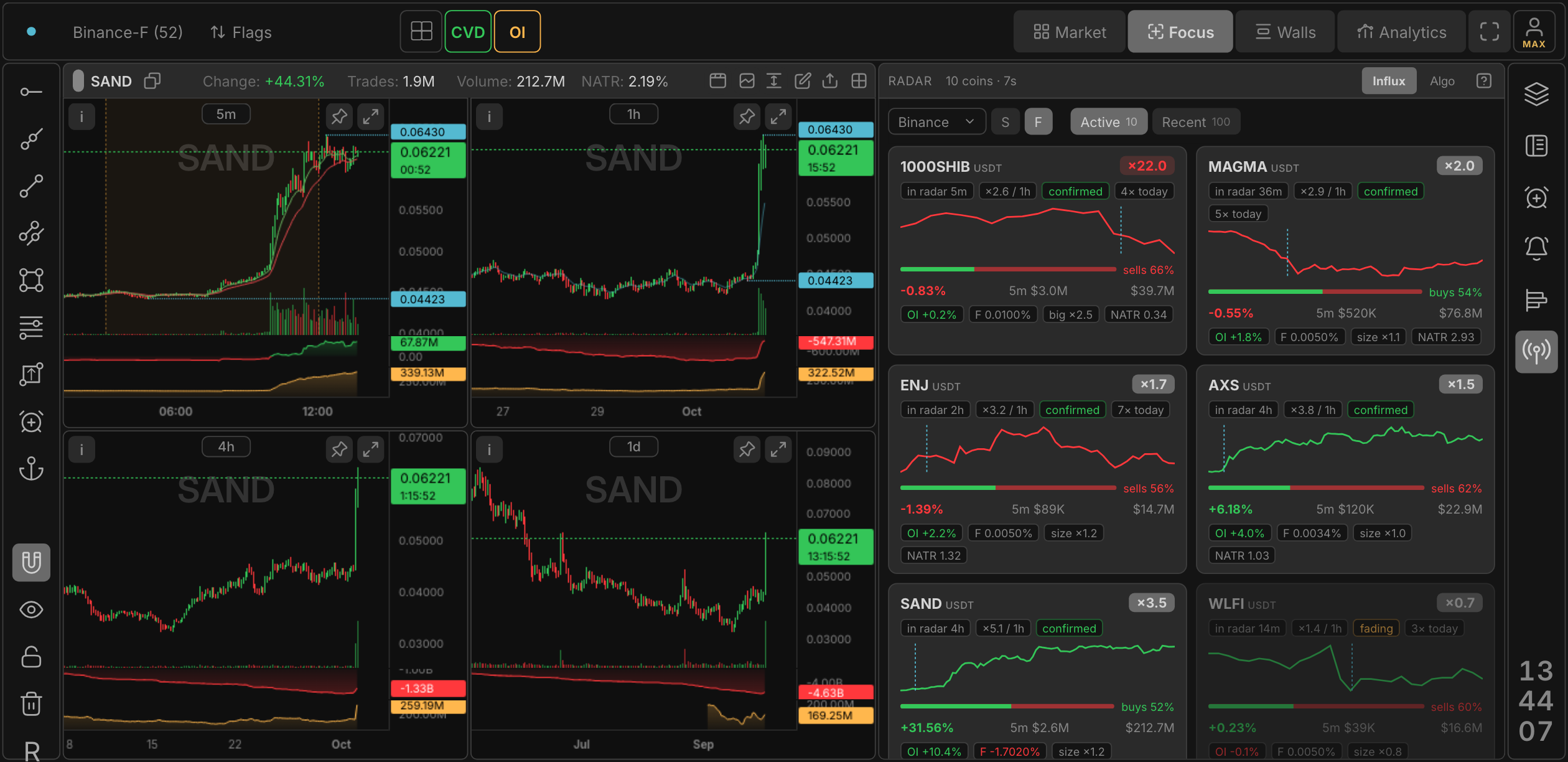
The radar watches every coin's turnover against its own daily pace and lists the ones that just spiked, with the context a trader checks next: buy share, open interest, funding and volatility, and a sparkline from the moment of entry.
How a coin gets on the radar
Every ten seconds the radar compares each coin's last five minutes of turnover with a five-minute slice of its own 24-hour turnover. A coin enters when that multiple reaches 4x and the liquidity floors are met, stays confirmed while the pace holds, fades when it drops, and leaves after five minutes below the line. A coin that re-enters only earns a new card if it beats its previous peak, so a long pump does not spam the list.
What a card tells you
- x5m and x1h - how many times the normal pace the coin trades right now and over the last hour.
- Buy share - the taker buy share of the move, so a spike on sells reads differently from a spike on buys.
- OI 1h, funding, NATR - the derivative context without opening a second tool.
- Sparkline from entry - the price since the radar picked the coin up, with the entry marked.
Tap a card and the coin opens in focus mode on the right exchange and market. The chart is already warm: the radar pre-loads the chart data of every coin it lists.
What it is not
The radar tells you where attention went, not where price goes next. In the first days of live data the median move after an entry was close to zero and the share of up moves was near a coin flip. It is a place to look, with the context to decide, not a signal service.
Plans
Free: Binance. Pro and Max: all five exchanges, futures and spot.
Questions
How often does the radar refresh?
Every ten seconds, from the same served snapshots the screener sheet uses, so the numbers on the card and in the sheet agree.
Can I get an alert when a coin enters the radar?
Relative volume alerts cover the same mechanism today: set R. Vol with the multiplier you want and the alert fires on entry. A one-tap radar alert is on the roadmap.